Advantages of Ready-to-Move Flats
Immediate Possession
A major advantage is the ability to take possession immediately, allowing you to settle into your new home without any construction-related waiting period. This is particularly beneficial for families who need housing right away.
Greater Transparency
Buyers can physically examine the apartment, building quality, amenities, parking facilities, and surrounding neighbourhood. This level of transparency enables buyers to make a well-informed decision with greater confidence and peace of mind.
No Construction Delays
Since the project is already completed, there is no risk of delayed possession due to construction setbacks or approval issues.
Immediate Rental Potential
Investors can start generating rental income soon after purchasing the property, making it a practical option for those seeking regular returns.
Challenges of Ready-to-Move Flats
- Higher purchase prices compared to under-construction properties.
- Limited customization opportunities.
- Lower scope for significant price appreciation in the short term.
Understanding Under-Construction Apartments
An under-construction apartment is a property that is still being developed and will be handed over upon completion. These projects often attract buyers due to their competitive pricing and future growth potential.
Advantages of Under-Construction Apartments
Affordable Pricing
Developers typically offer attractive launch prices, making under-construction apartments more budget-friendly than completed homes.
Potential for Higher Appreciation
As construction progresses and infrastructure develops around the project, property values may increase, providing better returns over time.
Flexible Payment Options
Developers often provide flexible payment structures linked to construction progress, enabling buyers to manage their finances more comfortably throughout the purchasing process.
Scope for Personalization
Depending on the construction stage, buyers may have the opportunity to choose certain finishes, layouts, or interior specifications.
Challenges of Under-Construction Apartments
- Possession timelines may be extended due to unforeseen delays.
- Buyers may need to manage both rent and home loan payments simultaneously.
- Market conditions can affect expected returns.
- The final outcome may differ slightly from initial project representations.
Essential Factors to Consider Before Choosing the Right Property
Budget
If affordability is a primary concern, under-construction apartments often provide a lower entry point. However, buyers should also account for potential delays and associated expenses.
Purpose of Purchase
For immediate residential use, a ready-to-move flat is generally the better option. If the goal is long-term investment and capital appreciation, an under-construction property may offer greater advantages.
Risk Tolerance
Ready-to-move flats provide certainty and lower risk, while under-construction projects require patience and confidence in the developer’s ability to deliver on time.
Developer Reputation
Regardless of the property type, choosing a reliable builder with a proven track record is essential. Research project history, construction quality, legal approvals, and customer feedback before making a commitment.
Location and Future Growth
A property’s location significantly impacts its value. Evaluate connectivity, educational institutions, healthcare facilities, commercial hubs, and upcoming infrastructure developments that may influence future demand.
Which Option Is Better?
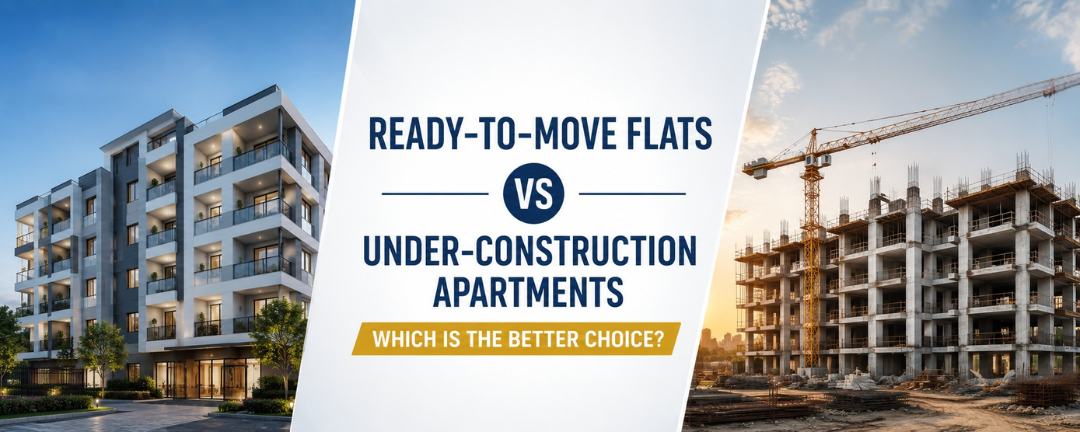
The ideal choice varies from one homebuyer to another. Ready-to-move flats are ideal for those seeking immediate possession, reduced uncertainty, and a hassle-free buying experience. Under-construction apartments are better suited for buyers who prioritize affordability, flexible payments, and long-term appreciation potential.
The right decision depends on your personal requirements, investment horizon, and financial readiness. Evaluating all important factors and conducting detailed market research can help buyers make informed decisions that support both their lifestyle needs and long-term investment objectives.
Conclusion
Choosing between a ready-to-move flat and an under-construction apartment is not just about price—it is about selecting a property that supports your lifestyle and financial goals. Ready-to-move homes provide convenience, certainty, and immediate occupancy, while under-construction projects offer affordability and opportunities for future growth. By evaluating factors such as budget, location, possession timeline, and builder credibility, homebuyers can make a well-informed decision that delivers long-term benefits.
For homebuyers exploring
Apartments in Hubli or considering
premium Flats in Hubli, partnering with a reliable developer can make a significant difference in achieving a rewarding homeownership experience. With a focus on quality construction, contemporary designs, and customer satisfaction, Seacon Properties strives to create residential spaces that cater to modern lifestyles while delivering lasting value. To explore thoughtfully planned projects and find your ideal home, visit
Seacon Properties and take the next step toward owning a property that meets your aspirations.